
Artwork
Reverse no longer visible
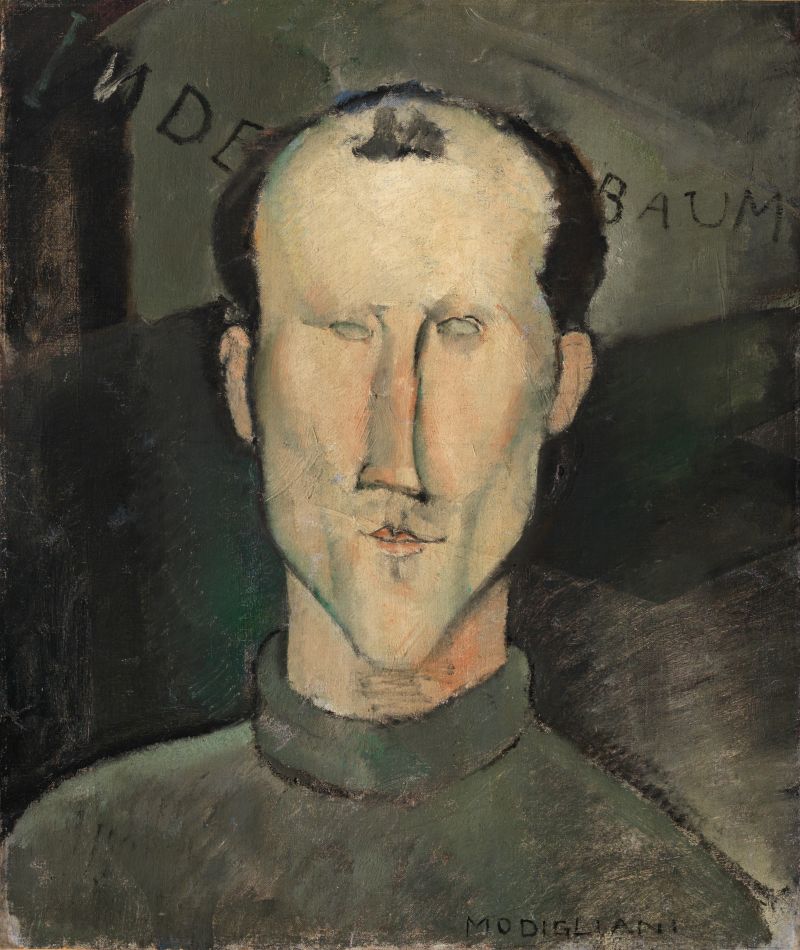
New York art collector Henry Pearlman (1895–1974) acquired the portrait in Paris in the late 1940s. Diligent about recording the history of the artwork in his collection, Pearlman was delighted to have the opportunity to meet the model, the Russian-born sculptor Léon Indenbaum (1890–1981), who explained how his portrait came to be.1 As Pearlman recalled, the story went:
"One night, Modigliani, while rather drunk, saw Indenbaum at a café and said he would like to paint his portrait, if Indenbaum would furnish a canvas and an easel to work on. The following morning at nine, Modigliani arrived, spruced up and ready to get to work. Indenbaum had various canvases of paintings by contemporary artists at his atelier. They had been returned, unsold and unclaimed, from a sale for a charitable fund. After turning down several of these canvases because he thought the paintings were too good to spoil, Modigliani found a still-life that he thought could be sacrificed, so he scraped off the heavy paint and commenced.
After three morning sittings of about four hours each, the portrait was finished, and presented to Indenbaum. On looking at it carefully one can see the table and bottle that were part of the original still-life. Several weeks later, Indenbaum, being short of money, sold his portrait for forty francs (eight dollars). When he finally explained to Modigliani that he was forced to sell it, Modigliani said, 'That's all right, I'll do it again.' However, this never happened."
Canvas information
Based on Indenbaum's recollections, his portrait was painted over a composition of a landscape by an unknown painter.